Why Intentional Design Outperforms Trend-Based Living

Modern design culture rarely pauses.
Aesthetic trends move through digital spaces at extraordinary speed, reshaping interiors, routines, and purchasing habits faster than environments can meaningfully settle. One season favors bright minimalism. The next introduces layered maximalism. Materials, colors, silhouettes, and styling philosophies rotate continuously through algorithm-driven exposure.
The result is not simply visual change.
It is environmental instability.
At Palermo Lane, intentional design exists in contrast to this constant cycle of reinvention.
Not because trends themselves are inherently negative, but because environments built primarily around novelty often struggle to create long-term cohesion, clarity, and functionality.
Intentional design prioritizes endurance over immediacy.
It asks not only whether something appears appealing today, but whether it will continue supporting daily life years from now.
This shift fundamentally changes how environments are created, how products are selected, and how spaces evolve over time.
The Problem With Trend-Driven Environments
Trend-based living often begins with visual inspiration rather than structural consideration.
A room is redesigned because a particular palette becomes popular. Furniture is replaced because a silhouette no longer feels current. Decorative layers accumulate quickly without evaluating whether they improve environmental function or cohesion.
Over time, spaces become reactive.
This creates several long-term problems:
inconsistent material language
fragmented visual identity
repeated replacement cycles
increased environmental clutter
emotional dissatisfaction despite continued consumption
Trend cycles encourage constant correction.
Instead of allowing environments to mature naturally, spaces are repeatedly reset to align with changing external aesthetics. Even beautifully designed rooms can begin feeling unstable when every component is selected independently through short-term inspiration rather than long-term integration.
Intentional design operates differently.
It builds environments around continuity rather than constant reinvention.
Design Should Support Life, Not Compete With It
One of the most overlooked aspects of intentional design is its relationship to emotional steadiness.
Many trend-driven spaces are visually stimulating but operationally exhausting. Excessive variation, decorative layering, and constantly shifting aesthetics demand attention continuously. Rooms begin performing visually rather than supporting the rhythms of daily life.
Intentional environments feel different.
They are designed to reduce interruption rather than create it.
Movement becomes intuitive. Lighting supports function naturally. Materials feel cohesive rather than competing. Storage integrates quietly into the architecture of the space instead of appearing as a temporary solution layered afterward.
The environment becomes supportive rather than performative.
This distinction matters deeply because people do not simply observe their environments.
They live inside them.
And environments that constantly compete for attention gradually increase cognitive fatigue even when they appear aesthetically appealing.
Material Integrity Creates Long-Term Cohesion
Intentional design begins with material consideration.
Materials influence how environments age, how they feel emotionally, and how cohesive they remain over time. Durable materials develop character gradually rather than deteriorating visually after short-term use.
Solid wood softens with age. Natural stone acquires depth. Metal hardware retains structural clarity. Linen and leather mature rather than unravel aesthetically.
These materials create continuity because they are not dependent on temporary novelty for relevance.
Trend-based products often prioritize immediate visual impact instead:
heavily stylized finishes
low-durability composites
novelty textures
temporary color saturation
materials selected primarily for social visibility
The problem is not aesthetic experimentation itself.
The problem is building foundational environments around materials that cannot age gracefully.
Intentional design favors permanence where permanence matters most.
Cohesion Reduces Cognitive Load
The human brain constantly processes environmental information.
Every contrasting finish, visual interruption, and unresolved organizational layer requires mental processing, even when that processing occurs subconsciously. Spaces that lack cohesion often feel emotionally tiring long before the source of discomfort becomes consciously identifiable.
Intentional design reduces this friction through consistency.
This does not require identical colors or rigid minimalism. Cohesion emerges through proportional balance, material repetition, environmental rhythm, and restrained variation.
When spaces feel cohesive:
movement feels calmer
decision-making becomes easier
routines become smoother
maintenance decreases
visual overstimulation declines
Steady environments support mental clarity because the brain no longer needs to continually recalibrate itself against competing visual information.
Calm is often architectural long before it becomes emotional.
Systems Matter More Than Styling
Intentional design is not solely aesthetic.
It is systemic.
A visually beautiful pantry that lacks operational organization will still create friction. An elegantly styled workspace without proper lighting or flow will still reduce efficiency. A carefully decorated recovery room that cannot support routine use will eventually become performative rather than functional.
Intentional design asks:How does this environment operate daily?
Systems shape experience more profoundly than decoration alone.
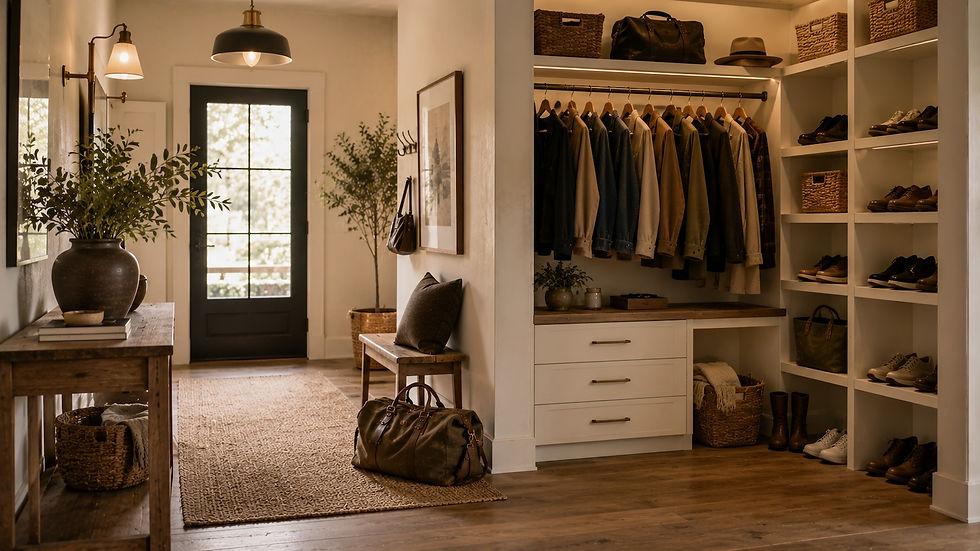
A structured entryway simplifies transitions into the home. Integrated storage preserves visual clarity. Dedicated recovery zones encourage consistency. Layered lighting changes emotional rhythm throughout the day. Furniture placement influences movement intuitively.
When systems are intentional, environments require less correction over time.
Trend-focused design often prioritizes immediate appearance while overlooking operational longevity.
The Palermo Lane Perspective on Intentional Living
The Palermo Lane Perspective on Intentional Living
At Palermo Lane, intentional design extends across multiple interconnected dimensions of daily life, shaping how environments function, how routines develop, and how spaces support long-term clarity.
Northlume Living approaches organization as environmental architecture rather than decorative containment, emphasizing systems that reduce operational friction and preserve calm.
Cashmere Calm focuses on restorative environments, layered skincare systems, and immersive wellness rituals that reinforce consistency and sensory steadiness.
Velorian Studio prioritizes disciplined performance systems, mobility infrastructure, and recovery environments designed for long-term resilience rather than trend-driven fitness culture.
Greyson Field explores refined recreational systems, transport organization, and field-ready environments built around preparedness, durability, and intentional movement.
Ashford Terrace extends intentional design into exterior living through layered outdoor environments, architectural gathering spaces, durable furnishings, and refined entertaining systems designed to age gracefully over time.
Copperpeak Kitchen approaches the kitchen as a long-term operational environment where workflow, material integrity, and thoughtful culinary systems improve daily function and reduce unnecessary friction.
Oakleaf Table emphasizes intentional hosting, refined table environments, and gathering rituals designed to create warmth, rhythm, and cohesion without excess visual noise.
Mercer Estate integrates pet living into the structure of the home through furniture-grade systems, organized feeding environments, and cohesive interior integration that preserves environmental calm.
Lynden Essentials focuses on refined daily utility, organizational carry systems, and practical essentials designed to simplify movement through everyday routines while maintaining visual cohesion and long-term functionality.
Caspian Journey explores structured travel systems, durable mobility infrastructure, and refined organization solutions that reduce friction before, during, and after travel.
Each division reflects the same foundational philosophy:intentional environments should support life quietly, cohesively, and sustainably over time rather than demanding continual reinvention.
Designing With Time in Mind
Trend-based consumption is largely reactive.
Intentional design is anticipatory.
Instead of asking what feels current, intentional environments are shaped around questions like:
Will this still function well years from now?
Can this integrate with evolving routines?
Does this material age gracefully?
Does this system reduce friction long-term?
Will this environment remain emotionally steady over time?
These questions slow consumption down.
But slowing down often improves environmental quality dramatically.
Intentional spaces rarely feel hurried because they are layered gradually through considered decisions rather than rapid aesthetic replacement cycles.
This slower approach creates environments that feel grounded rather than temporary.
Why Intentional Design Feels More Luxurious
True refinement rarely announces itself loudly.
Many genuinely luxurious environments feel calming not because they are extravagant, but because they are coherent. Materials align. Proportions feel balanced. Lighting supports atmosphere naturally. Objects feel selected rather than accumulated.
Luxury is often the absence of friction.
This is why intentionally designed spaces frequently feel emotionally richer than highly trend-driven interiors despite using fewer visual statements.
The environment feels settled.
Nothing is competing aggressively for attention.
Intentional design creates confidence through restraint.
The Difference Between Curation and Consumption
Trend-based living encourages accumulation.
Intentional living encourages curation.
Accumulation is reactive:
buying to refresh
replacing to remain current
layering without integration
consuming without long-term structure
Curation is architectural.
Each addition is evaluated according to:
longevity
cohesion
function
material integrity
behavioral support
environmental rhythm
Over time, curated environments become increasingly stable because every layer reinforces the broader structure of the space.
This creates homes that feel grounded rather than perpetually unfinished.
Designing Environments That Endure
Intentional design is ultimately about endurance.
Not endurance through rigidity or aesthetic perfection, but through alignment between environment, routine, material, and function.
At Palermo Lane, we believe environments should evolve slowly and deliberately rather than resetting constantly around external trend cycles.
A calm home is rarely accidental. A cohesive environment rarely emerges through impulse alone.
Clarity is built through thoughtful systems. Steadiness is reinforced through continuity. And intentional design creates spaces capable of supporting life long after trends begin to fade.