Designing Environments That Support Better Habits
Updated: Jun 14

Start Here:
Most people try to change their habits by focusing on willpower.
They make promises, set goals, and create plans, only to find themselves slipping back into old routines weeks later.
Often the problem isn't a lack of discipline. It's that the environment around them continues encouraging the behaviors they're trying to change.
Ask Yourself These Questions:
Does my environment make good habits easy or difficult?
Are the tools and resources I need readily available?
What distractions or obstacles regularly interrupt my routines?
Does each space in my home support its intended purpose?
Am I relying on motivation when better design could do the work instead?
The most successful habits are often supported by thoughtful environments rather than constant effort.
Small changes to the spaces where we live, work, cook, exercise, and relax can dramatically increase consistency while reducing the mental energy required to stay on track.
This article explores how intentional design can help create habits that last.
Most people attempt to change their lives through motivation.
They set ambitious goals. Create strict routines. Promise consistency. Plan dramatic resets.
For a short time, motivation often works.
Then ordinary life returns: fatigue, stress, distraction, changing schedules, unexpected responsibilities, emotional exhaustion.
Gradually, routines begin slipping. Consistency weakens. The environment quietly pulls behavior back toward older patterns.
At Palermo Lane, we believe one of the most overlooked realities of intentional living is this:
Most habits are shaped less by willpower than by environment.
The spaces people move through every day quietly influence:
behavior
emotional regulation
routine consistency
decision-making
energy levels
focus
recovery
movement patterns
Environments either reinforce habits naturally —or continuously work against them.
Why Motivation Eventually Fails
Motivation is emotional energy.
And emotional energy fluctuates constantly.
This is why routines built entirely around motivation often collapse quickly. People assume they simply need greater discipline, but the deeper issue is that motivation alone rarely survives environmental resistance long-term.
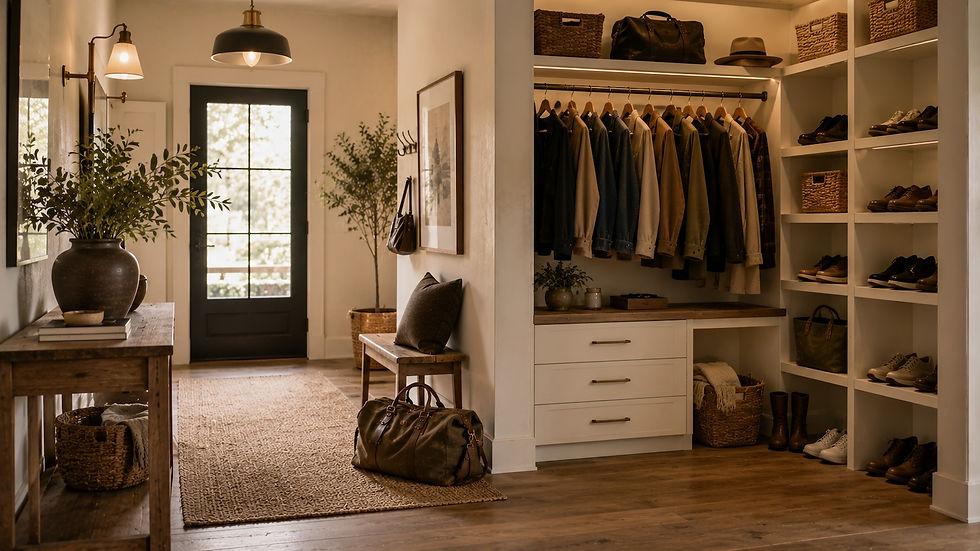
A cluttered kitchen discourages cooking. A chaotic workspace interrupts focus. An overstimulating bedroom disrupts recovery. A disorganized entryway increases stress before the day even begins.
Even small friction points influence behavior repeatedly over time.
The environment quietly shapes what feels:
easy
difficult
inviting
exhausting
approachable
avoidable
This influence becomes stronger the more frequently an environment is used.
Habits Are Often Environmental Responses
Many behaviors are not conscious decisions at all.
They are environmental reactions.
People eat differently in organized kitchens. Recover differently in calming bedrooms. Move differently in uncluttered spaces. Focus differently in visually balanced environments.
The brain constantly responds to cues:
accessibility
lighting
visual clarity
movement flow
emotional atmosphere
sensory intensity
When environments create excessive friction, the nervous system naturally seeks easier alternatives.
This is why intentional environments matter so deeply.
They reduce resistance before discipline is even required.
The Relationship Between Friction and Consistency
Consistency is often misunderstood as a personality trait.
In reality, consistency is heavily influenced by friction.
When routines require:
excessive setup
constant decision-making
environmental correction
complicated organization
emotional effort
the brain gradually begins resisting the behavior itself.
Small friction points compound quietly:
inaccessible workout equipment
cluttered counters
poorly organized storage
difficult cleanup routines
overloaded daily systems
Eventually, even beneficial habits begin feeling emotionally heavy.
Intentional environments reduce this burden by making supportive behaviors easier to repeat naturally.
Kitchens Quietly Shape Daily Nutrition
The kitchen is one of the clearest examples of behavioral architecture.
People often assume eating habits are determined primarily through discipline or nutritional knowledge. But environmental structure strongly influences consistency.
A difficult kitchen discourages cooking. Overcrowded counters interrupt preparation. Poor workflow increases cleanup resistance. Disorganized storage creates decision fatigue.
Copperpeak Kitchen approaches kitchens as operational environments designed to support sustainable daily rhythms.
Intentional culinary environments prioritize:
workflow clarity
accessible preparation
durable tools
simplified maintenance
calm visual structure
When cooking becomes easier operationally, healthy routines require less emotional effort to maintain consistently.
Recovery Spaces Influence Wellness
Wellness is also heavily environmental.
People often struggle maintaining restorative routines because their environments never fully support recovery behavior consistently.
Bright lighting late at night, visual clutter, unfinished tasks, overstimulating spaces, disorganized wellness systems —all increase nervous system activation.
Rather than focusing on complicated wellness routines or performance-driven self-care culture, Cashmere Calm emphasizes approachable restorative experiences through:
layered skincare rituals
calming body care
facial and recovery tools
soothing sensory environments
comforting everyday luxuries
Velorian Studio reinforces long-term resilience through intentional movement and recovery infrastructure designed to reduce behavioral resistance over time.
Wellness routines become more sustainable when environments quietly support them.
Organization Affects Mental Bandwidth
Organization influences far more than appearance.
Disorganized environments increase:
visual processing demands
decision fatigue
environmental uncertainty
emotional overwhelm
This reduces available mental bandwidth for intentional behavior.
Northlume Living approaches organization as environmental architecture rather than decorative containment.
The goal is not sterile perfection.
It is creating spaces where:
movement feels intuitive
systems remain accessible
routines require less active management
environments feel mentally lighter
When the environment becomes easier to process, daily life often becomes easier to navigate emotionally as well.
Gathering Rituals Shape Emotional Rhythm
Oakleaf Table explores how intentional gathering rituals shape emotional rhythm and long-term connection within the home.
Shared meals,slower evenings, intentional hosting, and thoughtfully prepared gathering spaces all reinforce behavioral patterns that modern life often disrupts through overstimulation and constant urgency.
Environments designed for gathering encourage:
slower pacing
greater presence
reduced digital distraction
conversation
continuity
emotional connection
The goal is not performative entertaining or excessive hosting culture.
It is creating spaces that naturally support warmth, rhythm, and meaningful shared experiences over time.
Even small gathering rituals — a slower breakfast, shared coffee, an intentionally set table, a quiet evening meal — can gradually reshape how environments feel emotionally within daily life.
Outdoor Environments Influence Emotional Rhythm Too
Behavior is shaped by exterior environments as well.
Natural light,fresh air,open space,movement pathways,gathering areas,visual openness —all influence emotional regulation.
Ashford Terrace explores outdoor environments through slower pacing, layered gathering spaces, and intentional exterior structure designed to encourage restoration rather than overstimulation.
Greyson Field reinforces preparedness, movement, and recreational steadiness through thoughtfully integrated outdoor systems.
Outdoor environments often determine whether people slow down enough to recover at all.
The Environment Always Wins Eventually
One of the most important truths about behavioral architecture is this:
The environment usually wins over intention eventually.
Not because people are weak.Not because motivation lacks value.
But because environments influence behavior continuously while motivation fluctuates naturally.
A supportive environment reduces resistance.An unsupportive one increases it repeatedly.
This is why thoughtfully designed systems matter so deeply.
They quietly shape daily life through repetition.
Sustainable Habits Require Supportive Environments
The goal of intentional living is not forcing perfect behavior constantly.
It is creating environments where supportive behaviors become easier to repeat naturally over time.
This requires:
reduced friction
accessible systems
emotional steadiness
operational simplicity
sensory calm
adaptable routines
Well-designed environments do not control people rigidly.
They support them gently.
And over time, gentle environmental reinforcement becomes significantly more sustainable than relying on motivation alone.
Final Thoughts: The Palermo Lane Perspective
At Palermo Lane, we believe environments shape behavior far more deeply than most people realize.
Homes influence routine. Lighting influences recovery. Organization influences emotional bandwidth. Movement systems influence preparedness. Outdoor environments influence emotional rhythm.
The goal is not creating perfect spaces.
It is creating supportive ones.
Because over time, environments designed intentionally begin quietly reinforcing:
steadier routines
calmer movement
better recovery
sustainable habits
reduced friction
more intentional living altogether
In the end, the environments we shape often become the habits, routines, and experiences that shape us in return.