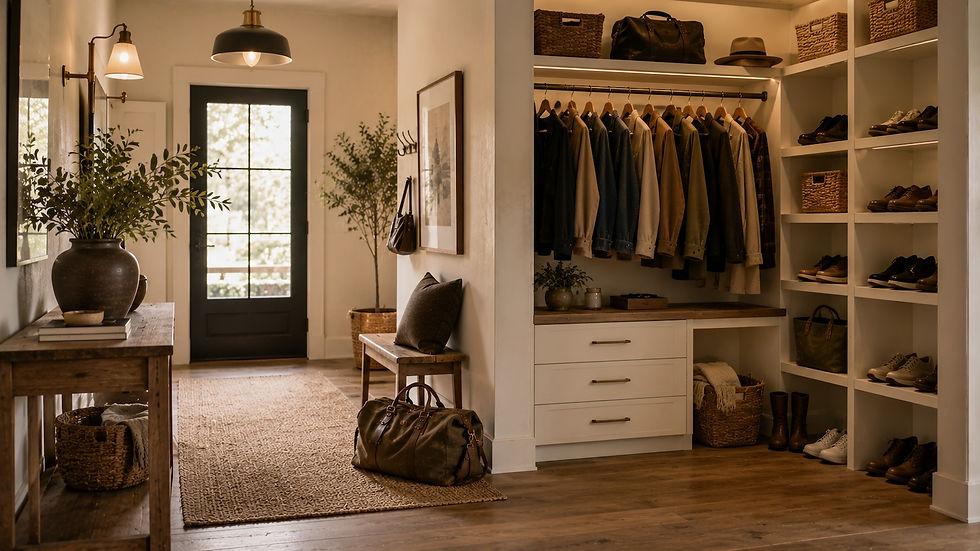
Why Calm Environments Feel Different

Most people recognize calm environments immediately.
The sensation often appears before conscious analysis begins. A room feels grounded. The nervous system softens slightly. Breathing slows. Attention steadies. Movement feels easier and less reactive.
Yet many people struggle to explain why certain environments create this response while others feel subtly exhausting despite being visually attractive.
At Palermo Lane, calm is not viewed as a decorative style or aesthetic trend.
It is viewed as an environmental experience shaped through sensory rhythm, visual cohesion, material consistency, and emotional predictability.
Some spaces feel calm because they reduce cognitive strain. Others feel overwhelming because they continuously compete for attention.
The difference is often architectural long before it becomes emotional.
The Nervous System Responds to Environment Constantly
Human environments are never emotionally neutral.
Lighting, texture, sound, proportion, spatial openness, visual complexity, and material variation are processed continuously by the nervous system whether consciously noticed or not.
This means environments influence emotional experience repeatedly throughout the day.
When spaces feel fragmented or overstimulating, the nervous system remains subtly alert:
visual interruptions increase mental processing
inconsistent lighting creates tension
overcrowded rooms reduce perceptual rest
excessive contrast keeps attention active
unpredictable environments increase cognitive fatigue
Many people interpret this sensation as stress without recognizing that the environment itself may be contributing significantly to the feeling.
Calm spaces reduce this background tension by creating steadiness rather than interruption.
Why Overstimulating Environments Feel Exhausting
Modern environments often prioritize stimulation.
Bright contrast.Constant visual layering.Excessive décor. Rapid trend changes.Aggressive lighting.Overcrowded surfaces.Competing materials.
While these choices may initially feel exciting or visually expressive, overstimulation becomes emotionally tiring over time because the brain is forced to continually process unresolved environmental information.
Attention rarely rests.
This creates subtle fatigue even when the environment appears beautiful at first glance.
Calm environments operate differently.
Instead of demanding attention constantly, they allow attention to settle naturally.
This distinction changes how spaces feel physically, emotionally, and psychologically.
Visual Rhythm Creates Emotional Stability
One of the defining characteristics of calm spaces is visual rhythm.
Rhythm emerges through repetition, balance, spacing, proportion, and material continuity. The eye moves through the environment smoothly rather than abruptly.
This does not require rigid symmetry or minimalism.
Instead, calm environments often rely on:
repeated natural materials
layered neutral tones
intentional negative space
soft transitions between rooms
restrained visual variation
balanced lighting distribution
When rhythm exists, environments feel easier to process neurologically.
The eye no longer encounters constant interruption.
This is why many intentionally designed spaces feel emotionally quieter even when they contain warmth, texture, and personality.
Lighting Shapes Emotional Perception
Lighting influences emotional experience more profoundly than almost any other environmental factor.
Harsh overhead lighting often creates subtle tension because it flattens space visually and overstimulates the eyes continuously. Inconsistent lighting creates imbalance between rooms. Overly bright environments reduce visual softness and increase sensory intensity.
Calm spaces instead use layered illumination:
ambient lighting for emotional warmth
natural daylight for openness
soft accent lighting for depth
indirect lighting for visual softness
The goal is not darkness.
It is sensory balance.
Warm, layered lighting changes how environments are experienced neurologically. Rooms feel slower, steadier, and more restorative because the nervous system is no longer responding to constant sensory intensity.
This is why calm homes often feel warm emotionally before individual design details are consciously noticed.
Materials Influence Emotional Weight
Materials affect emotional perception because texture and visual density influence how environments are processed psychologically.
Highly reflective surfaces, aggressive contrast, synthetic textures, and trend-driven finishes often create visual tension because they increase sensory activity within the space.
Intentional environments typically rely on materials that feel grounding:
natural wood
stone
linen
matte ceramics
woven textures
brushed metals
layered textiles
These materials absorb visual intensity rather than amplifying it.
They create softness without losing structure.
This is one reason calm environments frequently feel more emotionally restorative than highly stylized trend-driven interiors.
The environment feels settled rather than reactive.
Calm Requires Visual Breathing Room
One of the most overlooked elements within environmental psychology is visual breathing room.
Many environments become emotionally exhausting simply because there is nowhere for attention to rest.
Every surface contains objects. Every wall contains contrast. Every shelf contains layered decoration. Every corner demands visual engagement.
The result is subtle cognitive pressure.
Calm environments create openness intentionally.
This openness may appear through:
restrained styling
cleaner sightlines
thoughtful spacing
quieter color transitions
balanced proportions
architectural simplicity
The purpose is not emptiness.
It is allowing the nervous system moments of perceptual rest.
Visual breathing room changes how environments feel emotionally even when the observer cannot immediately explain why.
Sensory Calm and Restorative Living
Cashmere Calm explores this relationship between environment and restoration deeply.
True restorative environments rely on sensory steadiness:
softer lighting
layered textures
environmental warmth
visual cohesion
reduced interruption
predictable atmosphere
Many wellness spaces fail because they focus solely on decorative softness while ignoring sensory overload elsewhere in the environment.
Restoration becomes difficult inside spaces that remain neurologically overstimulating.
Calm environments support recovery because they reduce environmental tension continuously rather than adding to it.
Outdoor Spaces and Emotional Openness
Exterior environments influence emotional regulation more deeply than many people realize.
Ashford Terrace approaches outdoor environments through openness, rhythm, and slower environmental pacing rather than decoration alone.
Natural light, airflow, layered greenery, exterior textures, and spatial openness all contribute to emotional decompression.
This is one reason thoughtfully designed outdoor spaces often feel restorative almost immediately.
The nervous system responds positively to environments that feel spacious, predictable, and visually grounded.
Outdoor calm is not simply aesthetic.
It is physiological.
Cohesive Environments Feel Safer
One reason calm environments often feel emotionally comforting is because predictability creates psychological steadiness.
Cohesive environments communicate:
consistency
stability
reduced uncertainty
lower sensory threat
operational ease
Fragmented environments create the opposite effect:
unpredictability
visual tension
environmental confusion
overstimulation
constant recalibration
The nervous system responds to these differences continuously.
This is why calm spaces often feel emotionally restorative even before conscious thought fully engages with the environment itself.
The Palermo Lane Perspective
At Palermo Lane, calm is not viewed as a decorative aesthetic.
It is understood as the emotional result of intentional environmental psychology.
Lighting shapes atmosphere. Materials influence sensory weight. Rhythm affects emotional steadiness. Openness creates perceptual rest. Cohesion reduces cognitive strain.
Calm environments feel different because they are designed differently.
Not around stimulation. Not around excess. Not around constant novelty.
But around steadiness, softness, rhythm, and intentional sensory balance.
And over time, those environments quietly reshape how daily life feels altogether.