The Shift From Consumption to Curation
Updated: Jun 15
Start Here:
It is easier than ever to bring more into our homes.
More products, more apps, more organizers, more inspiration, more ideas, and more solutions are always available.
But more does not always create a better life. Sometimes it creates more noise, more maintenance, more decisions, and more pressure to keep up.
Ask Yourself These Questions:
Am I buying or adding things because they solve a real problem?
Does this item, system, or idea support the life I actually live?
Am I curating my home, or simply consuming more solutions?
What am I maintaining that no longer earns its space?
Would fewer, better choices make this area easier to manage?
The shift from consumption to curation is not about owning less for the sake of minimalism.
It is about becoming more intentional with what enters your home, schedule, routines, and attention.
A curated environment supports your real priorities instead of constantly asking for more time, money, and energy.
Modern life encourages accumulation constantly.
New products appear daily. Trend cycles accelerate continuously. Environments are expected to reinvent themselves season after season. Ownership becomes increasingly temporary. Objects are replaced before they fully settle into daily life.
The result is not simply consumption.
It is instability.
Homes feel perpetually unfinished. Systems remain fragmented. Objects accumulate without cohesion. Routines become layered around environments that never fully stabilize.
At Palermo Lane, intentional living begins with recognizing that accumulation alone rarely creates calm.
In many cases, it creates the opposite.
Structured living is not built through constant acquisition.
It is built through curation.
Why Modern Consumption Feels Exhausting
Most people do not consciously recognize how much emotional energy is consumed through modern ownership patterns.
Trend cycles encourage continual correction:
replacing functional objects prematurely
redesigning spaces before they mature
purchasing for novelty rather than integration
accumulating temporary solutions
reacting to aesthetics rather than long-term function
Over time, environments become visually and operationally fragmented.
The nervous system responds to this instability continuously.
Rooms begin feeling crowded even when organized. Storage systems overflow despite repeated reorganization. Objects lose meaning because ownership becomes temporary and reactive.
Many people assume the answer is simply buying better things.
But the deeper shift is philosophical.
The problem is not ownership itself.
It is unintentional ownership.
Accumulation and the Illusion of Improvement
Modern culture often treats acquisition as progress.
A new product promises efficiency. A redesigned room promises clarity. A new organizational system promises control. A new trend promises reinvention.
Yet many environments become more exhausting with every additional layer because accumulation rarely addresses the underlying structure of daily life itself.
Temporary excitement is mistaken for long-term improvement.
This creates a cycle where:
dissatisfaction increases
replacement accelerates
environments lose cohesion
routines become unstable
visual noise expands continuously
The environment begins demanding attention rather than supporting it quietly.
Intentional curation interrupts this cycle.
Curation Creates Environmental Stability
Curation is fundamentally different from accumulation.
Accumulation asks: What else can be added?
Curation asks: What truly belongs?
This distinction changes how environments evolve over time.
Curated environments prioritize:
longevity
material integrity
operational function
emotional steadiness
environmental cohesion
reduced maintenance burden
Instead of layering constant novelty into the home, intentional curation creates continuity between objects, systems, and routines.
The result is an environment that feels grounded rather than perpetually unfinished.
Why Fewer Better Systems Feel Different
One of the defining characteristics of curated environments is operational clarity.
Too many systems competing simultaneously often create more friction rather than less:
overcrowded organization
duplicated products
unnecessary complexity
excessive storage layers
fragmented routines
Intentional systems reduce this burden through simplicity and cohesion.
Northlume Living approaches organization through long-term environmental structure rather than temporary containment trends.
Copperpeak Kitchen emphasizes durable culinary systems designed to improve daily workflow rather than encourage endless gadget accumulation.
Lynden Essentials focuses on refined utility and intentional preparedness without unnecessary excess or operational clutter.
The goal is not deprivation.
It is reducing environmental noise so that systems function more naturally over time.
Material Integrity Changes the Experience of Ownership
Many modern products are designed around immediacy.
Materials deteriorate quickly. Finishes age poorly. Components fail prematurely. Objects are replaced before meaningful continuity can develop.
Curated environments operate differently because material integrity matters.
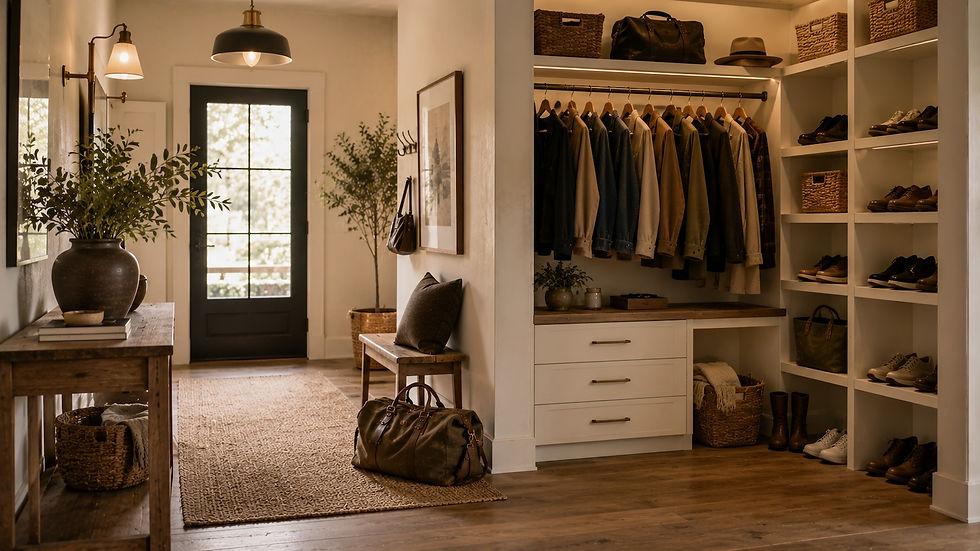
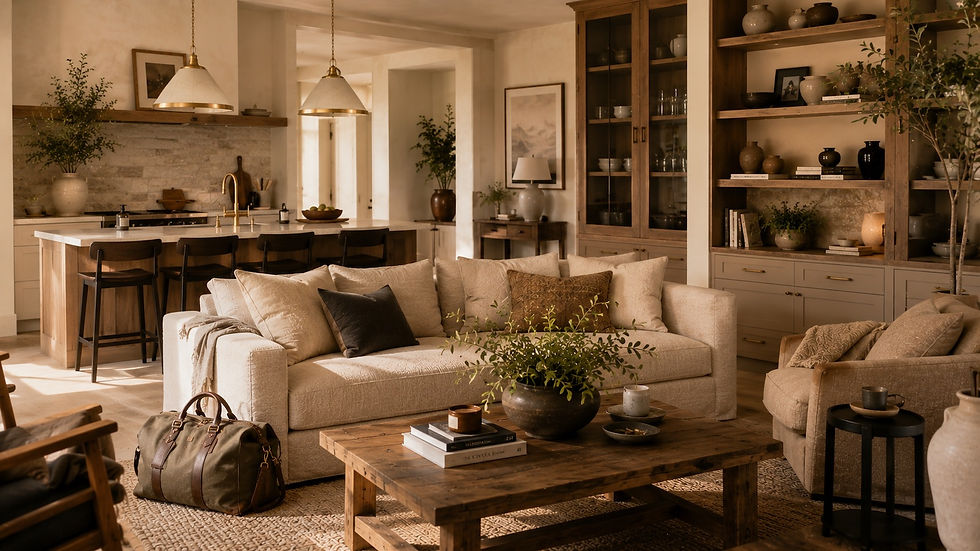
Natural wood softens with age. Stone develops character gradually. Linen becomes more comfortable through use. Leather gains depth rather than appearing damaged.
These materials create emotional steadiness because they age predictably.
They remain integrated into the environment instead of constantly forcing replacement cycles.
This is one reason intentionally curated homes often feel calmer:the environment is allowed to mature rather than continually reset itself.
Trend Cycles Prevent Environments From Settling
One of the least discussed consequences of trend culture is environmental instability.
When spaces are redesigned constantly around external aesthetics:
cohesion weakens
materials clash
routines become disrupted
emotional attachment decreases
ownership becomes temporary
Even beautifully designed rooms can begin feeling emotionally shallow when every component exists primarily for short-term relevance.
Intentional living favors slower evolution.
Not because change is inherently negative, but because environments require continuity to feel grounded.
Homes should develop depth over time rather than restarting endlessly through aesthetic replacement cycles.
Curation Extends Beyond the Home
Intentional curation also shapes movement, travel, gathering, and recovery.
Caspian Journey approaches travel systems through operational simplicity, refined organization, and durable mobility infrastructure designed for continuity during movement.
Ashford Terrace focuses on exterior environments built around long-term functionality, layered gathering, and durable outdoor living rather than seasonal trend rotation.
Oakleaf Table emphasizes intentional hospitality and enduring table environments that prioritize warmth and rhythm over performative excess.
Cashmere Calm reinforces restorative ritual through fewer, better wellness systems designed to support consistency and long-term care rather than impulsive product cycling.
Each division within the Palermo Lane collective reinforces the same broader philosophy:ownership should support steadiness rather than continual overstimulation.
The Emotional Weight of Excess
Excess creates more than physical clutter.
It creates cognitive and emotional fragmentation.
Too many unfinished systems. Too many unused objects. Too many low-quality replacements. Too many environments demanding continual maintenance.
Over time, this accumulation creates subtle psychological heaviness.
People often attempt to solve this heaviness through additional consumption: new containers, new furniture, new products, new redesigns.
But calm rarely emerges through more accumulation.
It emerges through intentional reduction of unnecessary noise.
Why Curated Environments Feel More Luxurious
True refinement is often quieter than modern consumption culture suggests.
Curated environments feel luxurious not because they contain the most objects, but because they contain fewer unresolved decisions.
Materials feel cohesive. Systems feel intentional. Spaces feel grounded. Objects appear selected rather than accumulated.
Nothing competes aggressively for attention.
This creates emotional ease.
And emotional ease is often what people are actually seeking when they pursue elevated living in the first place.
Final Thoughts: The Palermo Lane Perspective
At Palermo Lane, intentional living is not built around endless acquisition.
It is built around thoughtful curation.
Homes should not require continual reinvention to feel meaningful. Movement should not require excessive complexity. Wellness should not depend on constant product cycling. Travel should not feel operationally chaotic. Gathering should not become performative excess.
The goal is not owning less for the sake of minimalism.
The goal is owning intentionally.
Because over time, curated systems create something accumulation rarely can: continuity, clarity, steadiness, and environments that quietly support daily life instead of constantly demanding more from it.