Building a Structured Home Environment

A calm home rarely happens accidentally.
Most environments evolve reactively over time. Storage is added after clutter becomes overwhelming. Furniture is arranged around immediate convenience rather than movement. Decorative elements accumulate without considering cohesion, proportion, or long-term function. Systems are introduced inconsistently, often solving temporary frustrations while unintentionally creating new layers of complexity.
Eventually, the environment begins competing with daily life instead of supporting it.
This tension often appears subtly at first:
repeated searching for misplaced items
rooms that feel visually heavy despite being clean
kitchens that interrupt workflow
spaces that require constant adjustment
routines that feel harder to maintain than they should
These moments seem small individually.
Collectively, they shape the emotional rhythm of the home.
At Palermo Lane, structured living begins with recognizing that environments influence behavior, clarity, and emotional steadiness far more deeply than most people realize.
A structured home is not about rigid perfection or sterile minimalism.
It is about creating systems that reduce friction and support how life is actually lived.
Why Home Environments Matter So Deeply
People experience their homes continuously.
Unlike public spaces, retail environments, or temporary destinations, home environments shape the background rhythm of everyday life. Lighting, organization, movement flow, storage access, material consistency, and environmental calm influence emotional experience repeatedly throughout the day.
When environments are disorganized or visually fragmented, the nervous system remains subtly overstimulated.
The brain is forced to process:
unresolved visual tasks
inconsistent organization
environmental unpredictability
clutter accumulation
repeated micro-decisions
Over time, this creates cognitive fatigue.
Structured environments reduce this burden by introducing predictability, clarity, and operational ease into daily routines.
Calm is often structural long before it becomes emotional.
Structure Is About Flow, Not Restriction
One of the most common misconceptions about structured living is the assumption that structure limits comfort or creativity.
In reality, thoughtful structure improves freedom within the environment.
When systems are predictable:
movement becomes easier
routines require less effort
spaces feel calmer
maintenance decreases
decision fatigue is reduced
Structure removes unnecessary friction.
A well-designed home does not constantly demand correction.
It quietly supports the people living within it.
This is why truly refined environments often feel effortless rather than impressive. Their systems operate intuitively. Storage feels integrated rather than added afterward. Lighting aligns naturally with activity. Furniture placement supports movement instead of interrupting it.
The environment works with daily life rather than against it.
The Difference Between Organized and Structured
Organization alone does not automatically create a structured environment.
Many homes contain storage solutions while still feeling chaotic.
This happens because organization without environmental structure often becomes fragmented:
mismatched containers
inconsistent zoning
decorative storage without operational clarity
systems that require continual maintenance
rooms designed visually rather than functionally
A structured environment operates cohesively.
Every system supports a broader framework:
entryways simplify transitions
kitchens support workflow
lighting supports atmosphere and function
storage aligns with routine use
furniture supports proportion and movement
Structure is architectural.
It considers how the environment functions repeatedly over time rather than simply how it appears in isolated moments.
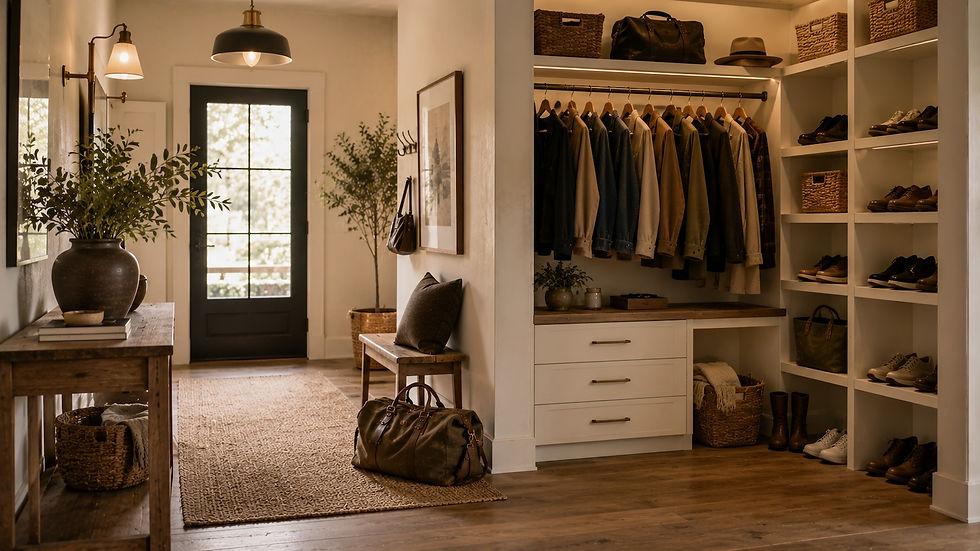
The Entryway: Where Environmental Rhythm Begins
One of the most overlooked areas within the home is the entryway.
Yet transitions strongly influence emotional rhythm.
When arrival points lack structure, clutter spreads quickly:
shoes accumulate unpredictably
bags lose consistent placement
keys disappear
surfaces become overloaded
visual noise enters the home immediately
A structured entryway creates environmental containment.
Thoughtful systems might include:
dedicated drop zones
concealed storage
layered lighting
seating integrated with utility
durable flooring transitions
consistent placement systems
These small adjustments dramatically reduce daily friction because they simplify repetitive movement patterns.
Structure succeeds most powerfully in the spaces used most frequently.
Kitchens as Operational Environments
The kitchen functions as one of the most operationally important spaces within the home.
Yet many kitchens become fragmented through:
mismatched tools
poor workflow
overcrowded storage
temporary organizational systems
trend-driven purchases lacking cohesion
Copperpeak Kitchen approaches kitchens as environments that should support routine consistency, preparation efficiency, and long-term functionality.
Structured kitchens prioritize:
workflow clarity
accessible preparation zones
durable materials
layered storage systems
visual cohesion
operational efficiency
When kitchens function smoothly, meal preparation becomes easier, routines become steadier, and daily friction decreases significantly.
Environmental structure directly influences behavioral consistency.
The Role of Materials in Environmental Calm
Materials influence how environments feel emotionally.
Low-quality or overly trend-driven materials often create visual instability because they age inconsistently, wear poorly, or rely heavily on novelty for relevance.
Intentional environments instead prioritize materials that mature gracefully:
natural wood
stone
linen
metal
leather
durable ceramics
layered neutral textiles
These materials create continuity over time.
They also reduce visual fatigue because they integrate naturally across multiple environments rather than competing aggressively for attention.
Calm homes rarely rely on excessive visual stimulation.
They rely on cohesion.
Lighting Shapes Emotional Experience
Lighting is one of the most influential yet underestimated elements within environmental structure.
Poor lighting creates tension even in beautifully organized spaces.
Overhead-only lighting often feels harsh and emotionally flat. Inconsistent lighting creates imbalance throughout the home. Rooms without layered illumination frequently feel unfinished regardless of décor quality.
Structured environments use lighting intentionally:
ambient lighting for atmosphere
task lighting for functionality
accent lighting for depth
natural light for rhythm and openness
Well-designed lighting softens transitions between spaces and changes how environments are emotionally processed.
This is why calm environments often feel warm before they feel visually impressive.
Lighting shapes atmosphere at a neurological level.
Outdoor Environments Matter Too
Structured living does not end at the walls of the home.
Ashford Terrace extends intentional design into exterior environments through:
architectural outdoor layouts
refined gathering spaces
layered exterior lighting
durable outdoor furnishings
cohesive entertaining infrastructure
Outdoor spaces influence emotional recovery, social rhythm, and environmental openness more deeply than many people realize.
When exterior environments are designed intentionally, homes feel more expansive and restorative overall.
The goal is not seasonal decoration.
It is creating outdoor environments that feel connected to the broader architecture of daily living.
Integrated Pet Living and Household Cohesion
Pets influence the structure of the home significantly.
Without intentional systems, pet living can create visual fragmentation and operational disruption:
inconsistent feeding areas
exposed storage
poorly integrated containment
scattered accessories
environmental clutter
Mercer Estate focuses on integrating pet systems into the home cohesively through:
furniture-grade containment
organized feeding systems
refined enrichment infrastructure
integrated storage
durable materials
The goal is not hiding pet living.
It is integrating it thoughtfully into the broader structure of the environment.
Structure Develops Incrementally
One of the most important aspects of structured living is understanding that environmental transformation happens gradually.
A structured home is layered intentionally over time.
One organized entryway improves transitions. One cohesive lighting plan changes atmosphere. One refined kitchen system improves workflow. One integrated storage solution reduces maintenance. One calmer outdoor environment encourages restoration.
These changes compound quietly.
The result is not dramatic perfection.
It is steadiness.
And steadiness changes how daily life feels over time.
The Palermo Lane Perspective
At Palermo Lane, structured living is not about aesthetic rigidity or performative minimalism.
It is about creating environments that support life more naturally through thoughtful systems, intentional materials, and long-term cohesion.
Every division within the Palermo Lane collective reinforces this same foundational principle: well-designed environments reduce unnecessary friction.
Clarity emerges through structure. Calm develops through cohesion. And over time, intentional homes begin quietly reshaping the emotional experience of everyday life itself.